You Have 2,000 Followers and Zero Friends: The Hidden Loneliness Crisis Reshaping Gen Z
When the Notifications Stop, the Silence Is Deafening
Sophia, 22, has 14,000 followers on TikTok. She posts regularly, gets decent engagement, and has a Discord server with over 300 members. She also told us, without much hesitation, that she hasn't had a real conversation in weeks.
"It's not that people aren't talking to me," she said. "It's that none of it actually feels like it means anything."
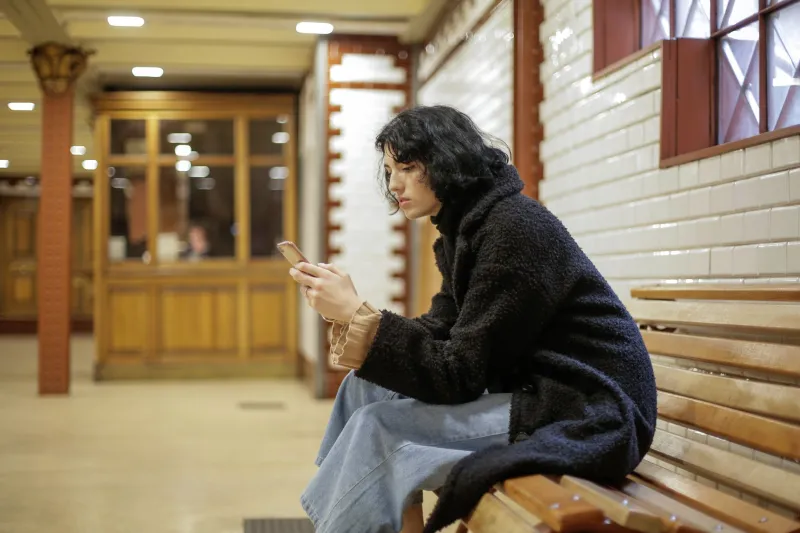
Her story isn't unique. Across the country, a generation raised on Wi-Fi and smartphones is quietly grappling with a loneliness epidemic that doesn't look anything like the kind you'd see in a movie. There's no sad figure sitting alone at a lunch table. Instead, it's someone lit by a phone screen, technically surrounded by thousands of people, feeling completely invisible.
The numbers back this up hard. A 2023 Gallup survey found that nearly 1 in 4 Americans under 30 report feeling lonely on a regular basis — a rate significantly higher than older generations. The American Psychological Association has flagged loneliness as a public health concern with effects comparable to smoking 15 cigarettes a day. And yet, we keep downloading new apps and chasing new platforms like the next one might finally be the one that makes us feel less alone.
The Paradox of Performative Presence
Here's the uncomfortable truth that nobody in the tech industry wants to say out loud: social media was never really designed to build community. It was designed to simulate it.
Dr. Keisha Monroe, a clinical psychologist based in Atlanta who works primarily with young adults, puts it bluntly. "What these platforms offer is the aesthetic of connection — likes, comments, shares. But genuine belonging requires vulnerability, consistency, and reciprocity over time. An algorithm can't manufacture that, no matter how good the UI is."
And Gen Z, for all the flak they get, actually knows this. They're not naive. Many of them are deeply aware that what they're consuming and producing online is a curated performance, not a window into real life. The problem is that awareness doesn't make the loneliness go away. If anything, it makes it worse — because you're lonely AND you understand exactly why, and you still can't stop scrolling.
Sociologist Dr. Ren Calloway, who studies digital culture at a university in Chicago, describes it as a kind of "social junk food" cycle. "You're hungry for real connection. You consume social media because it's fast and stimulating and it briefly satisfies that craving. But it doesn't nourish you. So an hour later, you're hungry again — and you go back for more."
Entertainment as Escape Hatch (and Trap)
Pop culture and entertainment have stepped into this gap in fascinating — and sometimes troubling — ways. The parasocial relationship, once a fringe psychological concept, is now practically the business model of the creator economy.
YouTubers, streamers, and podcasters have built entire careers on feeling like your friend. And for a lot of lonely young people, they genuinely function that way. Research from the University of Buffalo found that consuming media featuring familiar characters or personalities can temporarily ease feelings of social rejection. Watching your favorite streamer play games at midnight when you can't sleep isn't pathetic — it's filling a real psychological need.
But there's a ceiling on what that can give you, and a lot of Gen Z creators are starting to talk about it openly. Marcus, a 24-year-old gaming content creator from Houston with a growing YouTube channel, said the irony of his situation isn't lost on him. "I make videos so people feel like they're hanging out with me. And meanwhile I'm alone in my apartment, editing footage at 2 a.m., feeling like I don't actually have anyone to hang out with."
He's not alone in that observation. The creator-as-community-substitute dynamic has become something of an open secret online, with creators regularly posting about their own isolation even as their audiences grow. The content that performs best? Vulnerability. Loneliness. "Talking to the camera at 3 a.m. because I have no one else to talk to" videos rack up millions of views, because millions of people recognize exactly what that feels like.
Why IRL Feels Impossible Now
There's also a practical dimension here that doesn't get enough attention: the infrastructure for casual, low-stakes social interaction has quietly collapsed for young Americans.
Third places — the coffee shops, community centers, parks, and rec leagues that used to serve as neutral ground for people to connect outside of home and work — have been gutted by a combination of economic pressure, pandemic-era habits, and the simple fact that it's easier to stay home and scroll. When everything can be delivered to your door and every entertainment need can be met by a streaming service, there's less structural pressure to leave the apartment.
And when you do go out? The social skills that used to develop naturally through years of low-stakes face-to-face interaction are, for a lot of young people, genuinely rusty. Dr. Monroe sees this constantly in her practice. "I have clients in their early twenties who are highly intelligent, emotionally aware people, and they are terrified of unscripted social interaction. They know how to craft a tweet. They don't know how to keep a conversation going at a party."
The pandemic accelerated all of this dramatically, pulling the rug out from under college social experiences, early-career networking, and the general bumping-into-people randomness that used to spark unexpected friendships.
So What Actually Helps?
Nobody's suggesting you delete your apps and move to a cabin — though honestly, some people are, and their "I quit social media for a year" videos do numbers, which is its own kind of irony.
But researchers and therapists working in this space do point to some consistent themes. Structured, recurring in-person activities — a weekly pickup basketball game, a book club, a pottery class — seem to work better than unstructured socializing because they remove the pressure of having to initiate every single time. You show up, the context does the work, and connection can develop gradually.
There's also growing interest in what some researchers call "weak tie" relationships — the barista who remembers your order, the neighbor you wave to, the coworker you eat lunch near without it being a big thing. These connections feel small, but evidence suggests they contribute meaningfully to overall wellbeing and sense of belonging. They're the social equivalent of background music: you don't notice them much until they're gone.
For Gen Z specifically, some of the most interesting experiments are happening at the community level — local Discord servers tied to actual neighborhoods, "friend-finding" apps that emphasize activity-based meetups rather than profile browsing, and a quiet but real movement toward in-person events centered on analog activities like board games, zines, and live music.
The Metric That Matters
At the end of the day, the loneliness epidemic among Gen Z isn't really about social media being evil or screens being poison. It's about a generation that was handed an incredibly powerful tool for broadcasting themselves and told, implicitly, that broadcasting was the same thing as belonging.
It isn't. It never was.
Sophia, the TikToker with 14,000 followers, has started attending a weekly trivia night at a bar near her apartment. She knows maybe two people there. The conversation is awkward sometimes. Nobody's filming it.
"It's the only time in my week," she told us, "where I feel like a real person."
That's not a condemnation of the internet. It's just a reminder that some things haven't changed — and a follower count was never going to be one of them.