Glow Up and Get Even: Why We're Emotionally Invested in Other People's Comebacks

Let's be honest. When you heard that Taylor Swift was selling out stadiums, breaking records, and quite literally rewriting her own history while certain music executives watched from the sidelines — you felt something. Maybe it was a quiet satisfaction. Maybe it was a full-on fist pump in your living room. Either way, you felt it. And you weren't alone.
We are living, without question, in the Revenge Era. Not in a petty, keying-someone's-car kind of way — but in a deeply cultural, almost spiritual obsession with watching people rise after they've been pushed down. The glow-up isn't just a personal milestone anymore. It's a spectator sport. And audiences across America are absolutely glued to the screen.
The TikTok Transformation Pipeline Is Real
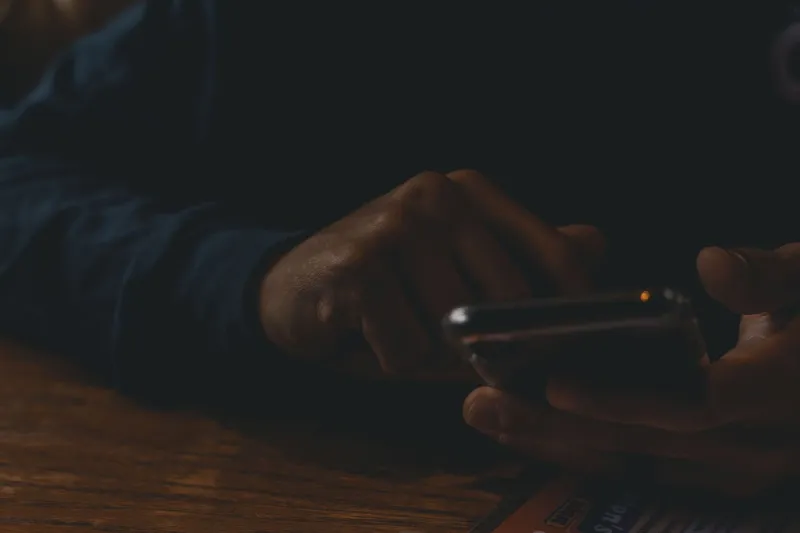
Scroll through TikTok for more than ten minutes and you'll inevitably land on one: the post-breakup transformation video. Someone films themselves looking exhausted and heartbroken, cuts to six months later looking like they just walked off a runway, and the comments section erupts with thousands of strangers cheering like they personally coached this person through it.
These videos rack up millions of views. Not because people are nosy — well, not only because people are nosy — but because they hit something primal. There's a narrative arc baked into them that our brains find deeply satisfying. Setup, conflict, resolution. Wrong committed, suffering endured, triumph achieved. It's a three-act structure that Shakespeare would recognize, just with better lighting and a trending audio track.
The person in that video is often a complete stranger. You will never meet them. Their ex's name means nothing to you. And yet you are emotionally invested in their glow-up like you've been best friends since middle school. That's worth unpacking.
We're All Looking for Proof That the Story Ends Okay
Here's the uncomfortable truth underneath all of this: we live in a world that frequently feels random and unfair. Good people get laid off. Loyal partners get cheated on. Talented artists get dismissed by gatekeepers with bad taste and worse judgment. The universe does not, despite what motivational posters suggest, always balance the scales on its own.
So when we see someone who was wronged — publicly, provably, undeniably — come out the other side thriving? It functions almost like proof. Proof that the story doesn't have to end at the lowest point. Proof that being underestimated isn't a life sentence. We're not just watching their comeback. We're borrowing it. We're using it as evidence for our own unresolved situations.
Psychologists sometimes talk about something called "narrative justice" — our deep need for stories to resolve in ways that feel morally coherent. Real life rarely delivers that cleanly. Pop culture, social media, and celebrity arcs sometimes do. And when they do, we hold on tight.
The Celebrity Comeback as Cultural Mirror
Taylor Swift is the most obvious example right now, but she's hardly the only one. Britney Spears' conservatorship battle and eventual freedom had people treating a legal proceeding like a sports championship. Kim Kardashian's pivot from tabloid punchline to billion-dollar entrepreneur was tracked with almost anthropological intensity. Even on a smaller scale, reality TV contestants who were humiliated on screen and later built massive platforms are treated like folk heroes by their fan bases.
What's interesting is how personal these narratives feel to their audiences, even when the subject is a multi-millionaire with a team of publicists. Part of that is parasocial connection — we've spent so much time with these people's images and stories that their wins feel like our wins. But part of it is something more universal. The specific details of the betrayal don't really matter. What matters is the shape of the story: someone was wronged, they survived it, and now they're undeniable.
That shape resonates because most of us have our own version of it. Maybe yours involves a job that fired you before your best work. Maybe it's a relationship that ended before you became who you were supposed to be. The celebrity's story becomes a kind of proxy for your own unwritten third act.
The Line Between Inspired and Obsessed
Of course, there's a version of this that gets a little complicated. The internet's appetite for revenge narratives can curdle into something less healthy — a demand that wronged people perform their healing publicly, on a schedule, in a way that satisfies the audience's need for closure. We start expecting the glow-up, which means we also start judging people who grieve differently or take longer to find their footing.
There's also the risk of flattening genuinely complex situations into clean hero-villain stories because that's what the algorithm rewards. Real life is messy. Sometimes the person who got hurt also caused hurt. Sometimes the comeback is complicated by factors that don't fit neatly into a 60-second video. The revenge era can struggle to hold that nuance.
And yet — even knowing all of that — the pull remains. Because the alternative, a world where the story just stops at the betrayal with no resolution, is genuinely harder to sit with.
So What Does This Say About Us?
Maybe the obsession with other people's comebacks says something generous about human nature. That we're wired to root for each other, to want the underdog to win, to find meaning in suffering when it leads somewhere. That collective investment in a stranger's glow-up is, in a weird way, a form of community — a shared agreement that the narrative should turn around, even when life doesn't guarantee it.
Or maybe it's simpler than that. Maybe we're all just a little bit tired of things feeling random and cruel, and watching someone step into their power after being underestimated is the closest thing we've got to the universe finally getting it right.
Either way, we'll be watching. Probably with our phones out, ready to share the video the second the music drops.