The Realness Industrial Complex: How Authenticity Became the Most Expensive Performance Online
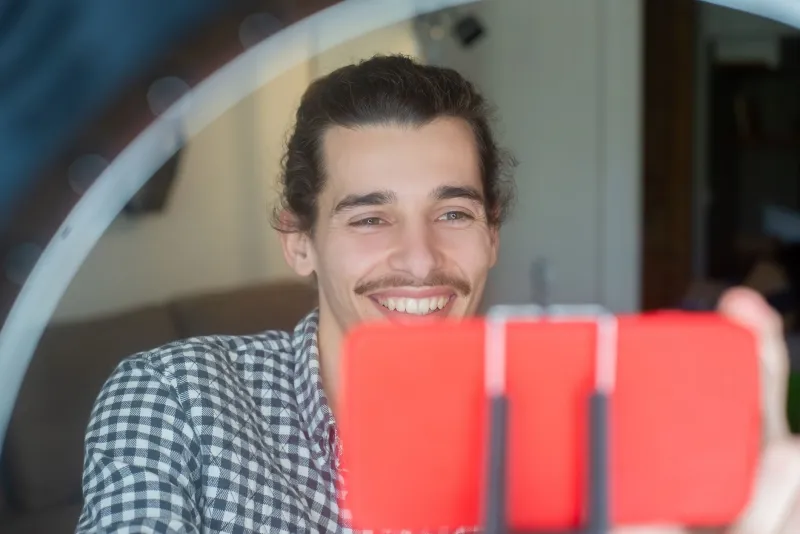
The lighting is deliberately bad. The caption mentions something painful. There's a pause before the punchline that feels unscripted, even though you've seen the same pause in seventeen other videos this week. The creator looks directly into the camera and says I don't usually share stuff like this — and then shares it to 2.4 million followers.
This is what authenticity looks like in 2025. Produced. Timed. Monetized.
When Real Became a Genre
Authenticity wasn't always a content category. For a while, it was just the thing that made certain creators break through — that ineffable quality of feeling like a real person rather than a brand. Early YouTube had it. Some corners of early Instagram had it. The rawness wasn't a strategy. It was just what happened when people pointed cameras at themselves before anyone had figured out how to optimize that.
Then the optimization happened.
Once platforms and brands figured out that audiences responded to realness — that vulnerability drove engagement, that imperfection read as trustworthy, that the unpolished aesthetic outperformed the glossy one — the authenticity playbook got written. And once the playbook existed, authenticity stopped being a quality and became a technique.
Now you can take a masterclass in it. Literally. There are coaches who will teach you how to seem unguarded. Consultants who will advise you on the optimal level of mess to show in your background. Editors who specialize in making things look like they weren't edited.
The Anatomy of a Manufactured Moment
The performed authenticity formula has become so recognizable that dissecting it almost feels mean. Almost. But understanding it matters, because it explains why so much online content leaves you feeling vaguely hollow even when it technically delivered everything it promised.
Here's the template: Start with a confession or a struggle — something that signals vulnerability. Keep the production value slightly below your usual standard, because polish is suspicious now. Include at least one moment of hesitation or self-correction that makes it feel unscripted. End with either a lesson learned or a deliberately unresolved emotional note, because resolution feels too packaged. Caption it with something lowercase and incomplete.
This formula works because it mimics the actual texture of real disclosure. But mimicry and the thing itself are different, and audiences — particularly younger ones — have developed a sensitivity to the difference that is almost uncanny. They can feel it when the vulnerability is load-bearing versus when it's decorative.
The Paradox Nobody Wants to Acknowledge
Here's the uncomfortable part: even calling this out is itself a move. The meta-awareness of performed authenticity has become its own brand of content. Creators who specialize in pointing out how fake everyone else is are just performing a different flavor of the same thing. I see through the performance is still a performance.
This is the hall-of-mirrors problem with authenticity discourse. Every layer of self-awareness adds another layer of performance. You can't fully escape it once you're aware of it. The only people who are genuinely unself-conscious online are the ones who haven't been told yet that they're supposed to be.
That's not cynicism. That's just what happens when a quality gets commodified. The moment realness became a marketable asset, it started losing the thing that made it valuable in the first place. The market doesn't know how to hold onto that. It only knows how to scale it.
What Audiences Are Actually Responding To
But here's what's interesting: despite all of this, audiences haven't stopped caring about authenticity. They've just gotten better at sniffing out the difference between genuine and rehearsed.
The content that actually breaks through — that generates the kind of response that can't be engineered — tends to share a few qualities. It's usually specific rather than relatable. Generic vulnerability (I've been struggling lately) lands differently than precise vulnerability (I spent three hours last Tuesday trying to write one email and ended up watching YouTube videos about aquariums instead). Specificity is hard to fake because it requires you to have actually experienced the thing.
It's also usually irrelevant to the creator's brand in some way. The chef who posts about their anxiety in a way that has nothing to do with food. The fitness influencer who admits their relationship to exercise is complicated. The moments that don't serve the content strategy are the ones that feel most like a real person, because a real person would have posted that anyway.
And it tends to have no clean takeaway. Real life doesn't resolve on a lesson. When content does — when every messy moment gets wrapped up with a growth arc — it starts to feel like a pitch deck for the creator's better self.
What Genuine Spontaneity Even Looks Like Now
Asking what real authenticity looks like online in 2025 is a little like asking what wild nature looks like in a national park. The framing changes the thing. The act of posting — of choosing to share something — is already a form of curation, no matter how raw the content is.
Maybe the more useful question isn't is this authentic? but does this person seem to be telling the truth? Truth and authenticity aren't the same thing. You can perform a true thing. But the truth still matters. It still lands differently.
The creators and people online who feel most real aren't the ones who've figured out the authenticity formula. They're the ones who seem to be in conversation with themselves about it — uncertain, inconsistent, occasionally contradictory. Not because that's a good look, but because that's what actually being a person looks like.
The Realness Industrial Complex will keep running. The playbook will keep getting updated. But the audience will keep moving the goalposts, because what they're actually looking for isn't a performance of realness.
They're looking for someone who forgot to perform.